If a parent has colon cancer, the risk for their children increases.
Starting next year, the fecal occult blood test for screenings will change from two tests to one.
Since the news broke, I've occasionally received questions from patients worried about colon cancer, asking, 'Is one test enough?'
I will think about this.
Let's think about this.
She underwent the fecal occult blood test (two-test method) during her annual health check-ups and had one positive result five years ago.
As a result, when she underwent a colonoscopy, it was diagnosed that there was no cancer or polyps, and the bleeding was caused by hemorrhoids.
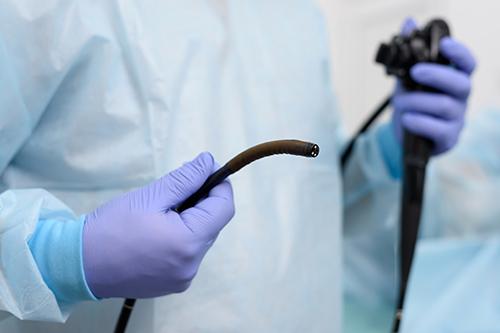
The colonoscopy at that time was very painful.
She said that her body was moved side to side, her abdomen was strongly pressed from above, and it hurt every time the endoscope went deeper, so she thought she never wanted to undergo an endoscopic examination again.
This year's fecal occult blood test was negative, but when I visited due to stomach issues, I was asked, 'Is it okay to do the fecal occult blood test once starting next year?'
I also looked into this change again.
Even if there is colorectal cancer, bleeding does not necessarily occur every day, and the probability of correctly detecting cancer with a single sample is 30-50%, but by doing it over two consecutive days, this can be increased to 80-90%, which is the basis for adopting the two-sample method.
However, according to the latest evaluations and data from institutions like the National Cancer Center, it has been found that there is not a significant difference in the rate of finding colorectal cancer between the one-sample and two-sample methods when the test result is positive.
Still, there is a risk of missing it, so it is recommended to get tested properly every year to compensate for the weaknesses of the one-sample method.
Colorectal cancer progresses slowly over the years, so the idea is that if you get tested every year without fail, it will eventually be detected.